Process
How each piece is made, technique by technique: from preparing the surface to the signature.
Each piece is made once, by hand. In the marbles, the pattern comes from the movement of the paint itself; in the reliefs, from the turn of the hand in the paste. That is why none can be repeated.
Every painting starts the same way: layers of wall-coat paste that hide the canvas weave, sanded and cleaned. And it ends the same way: the back painted, signed by hand on the back, and a protective coat.
Marbles
Prepare
I cover the cotton canvas or wood panel with several layers of wall-coat paste, which hide the weave of the fabric. Once it is dry, I sand the surface, clean it and tape around the edge, leaving a lip that holds the paint in so it does not drip off the sides.
Mix
I prepare the pouring medium and mix each colour in its own cup. Depending on the type of pour, I combine all the colours in one larger cup or pour each cup on its own.
Pour
I pour the paint onto the surface and tilt it so the paint runs until it covers everything. Then I remove the tape and tilt it again until every edge is covered in paint.
Dry
The piece dries for 5 to 6 days. Then I sand off any drips that reached the back.
Sign and protect
It depends on the finish. For varnish, I paint the back, sign it by hand and add four to six coats; within 24 hours it is dry. For epoxy resin, I pour the resin first and leave it to settle for 24 hours. Then I clean and paint the back, sign it and finish with a coat of varnish, which needs another 24 hours. So a resin finish adds a day or two. After that, it is ready to hang.
Relief
Prepare
I cover the cotton canvas or wood panel with several layers of wall-coat paste, which hide the weave of the fabric. Once it is dry, I sand the surface and clean it.
Shape
I put the right amount of paste on the area I am working on and shape it with a cake-decorating scraper or a similar tool, depending on the piece. The fans come from the scraper and from turning my hand in circles.
Paint
The paste dries for 24 hours. Then I give it a few coats of paint.
Sign and protect
Once the paint is dry, I sand off any unwanted residue, paint the back and sign it by hand. When everything has dried, a few coats of varnish protect the paint, or the paste itself when the piece is left unpainted.
Shorelines
Prepare
I cover the cotton canvas with several layers of wall-coat paste, which hide the weave of the fabric. Once it is dry, I sand the surface.
The sand
I add another layer of paste where the beach will be and, while it is wet, pour plenty of sand on top so it sticks. Once dry, I clear off the loose sand and tape the edges where the paint will be poured.
Pour
I prepare the pouring medium in separate cups and pour them in a set order. On top goes white pouring medium mixed with a special oil.
The wave
With a hair dryer I push the white across the paint to make the wave breaking on the shore.
Sign and protect
The piece dries for 5 days. I paint the back to remove any stains or finger marks, sign it by hand on the back and protect it with varnish, which also holds the sand in place.
In the studio
Studio videos, as they were filmed: the paint poured, tilted and settling. Some of these pieces are in the catalogue; others are not for sale.
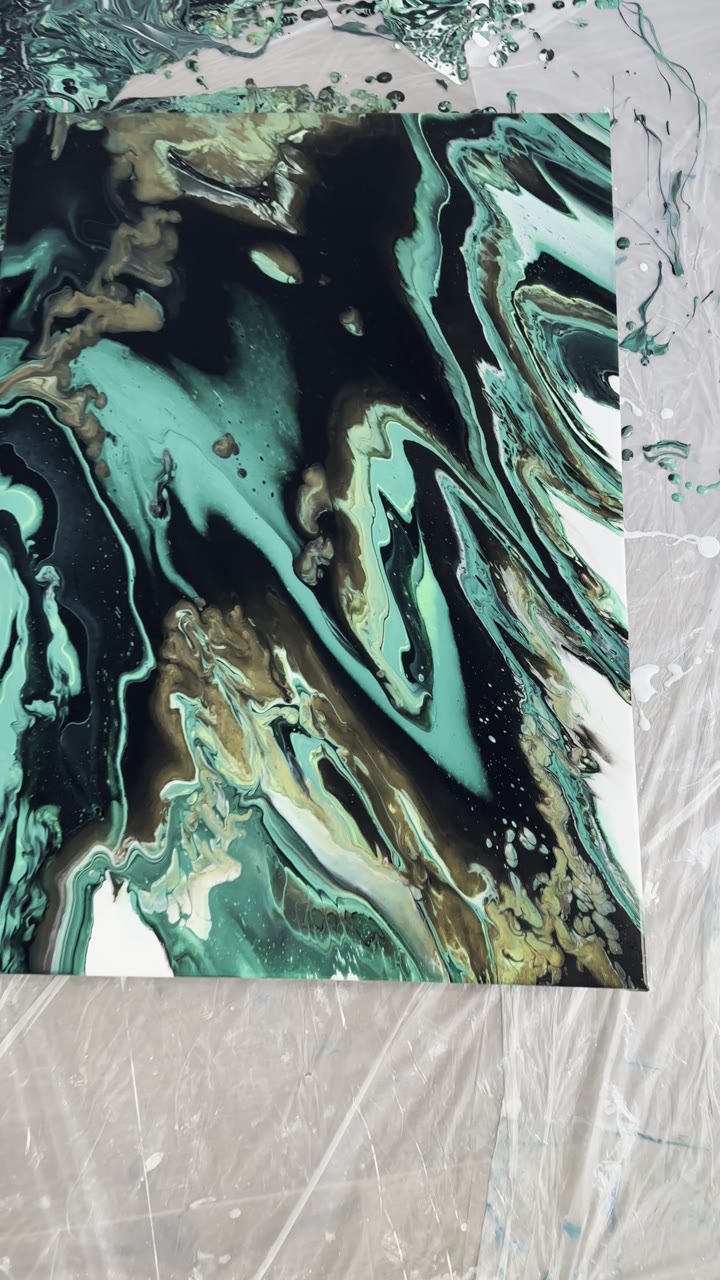 0:25
0:25
Freshly finished pieces
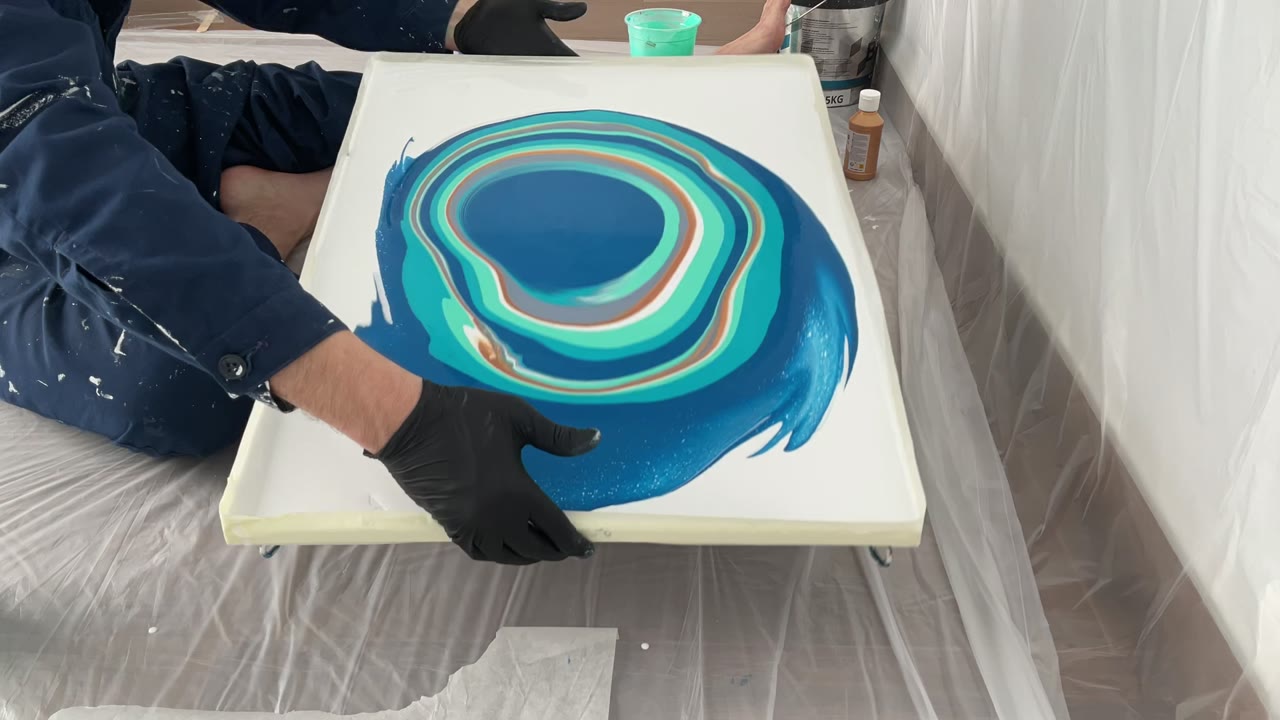 0:29
0:29
Blue Mystic Geode
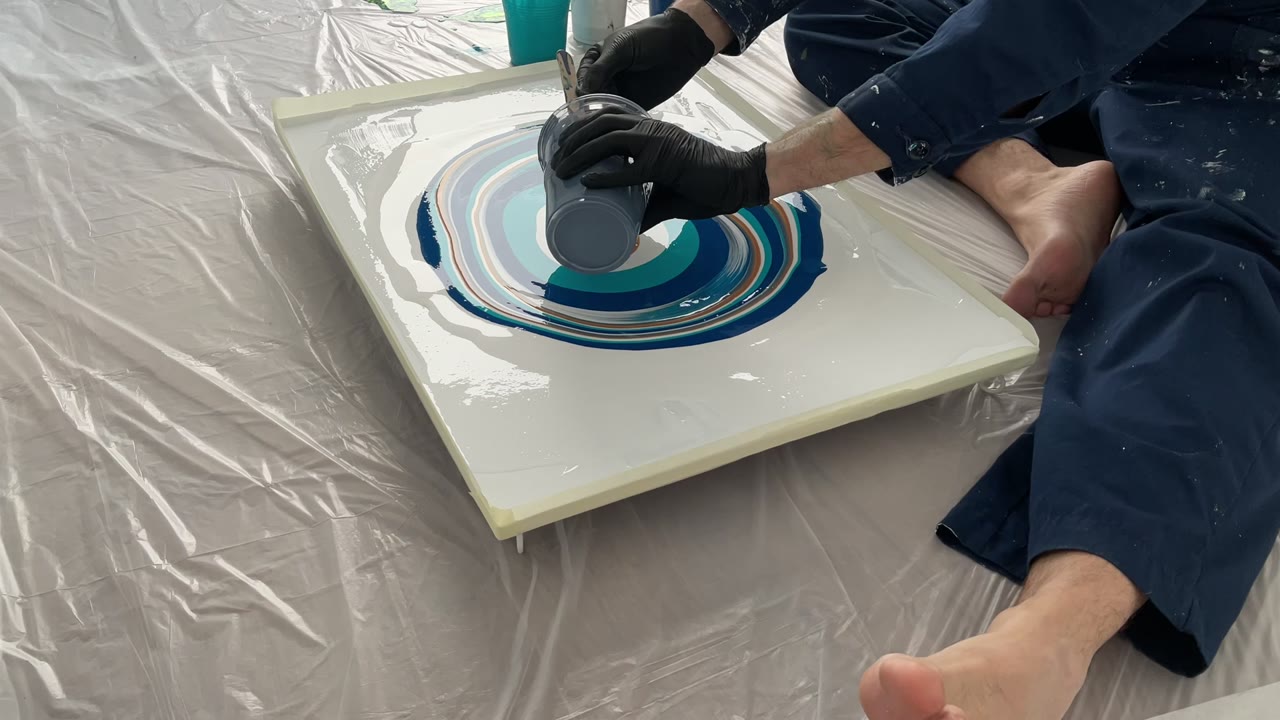 0:29
0:29
Blue Dreams Geode
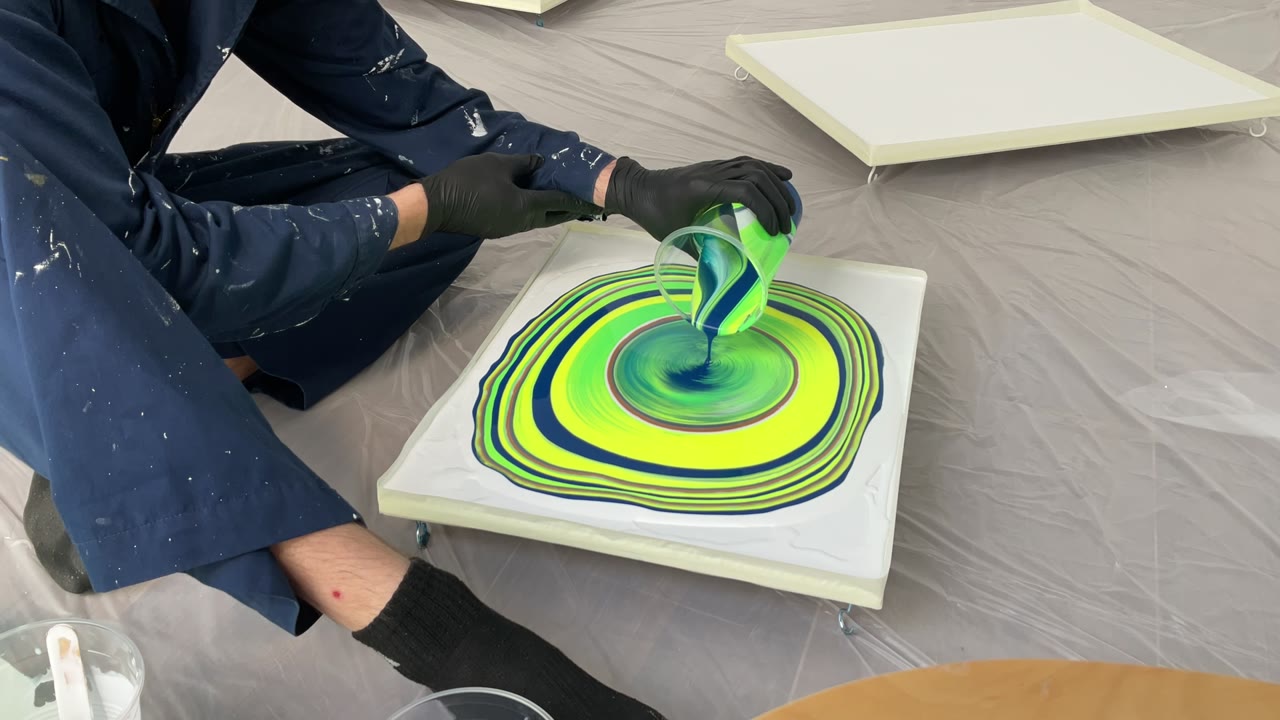 0:36
0:36
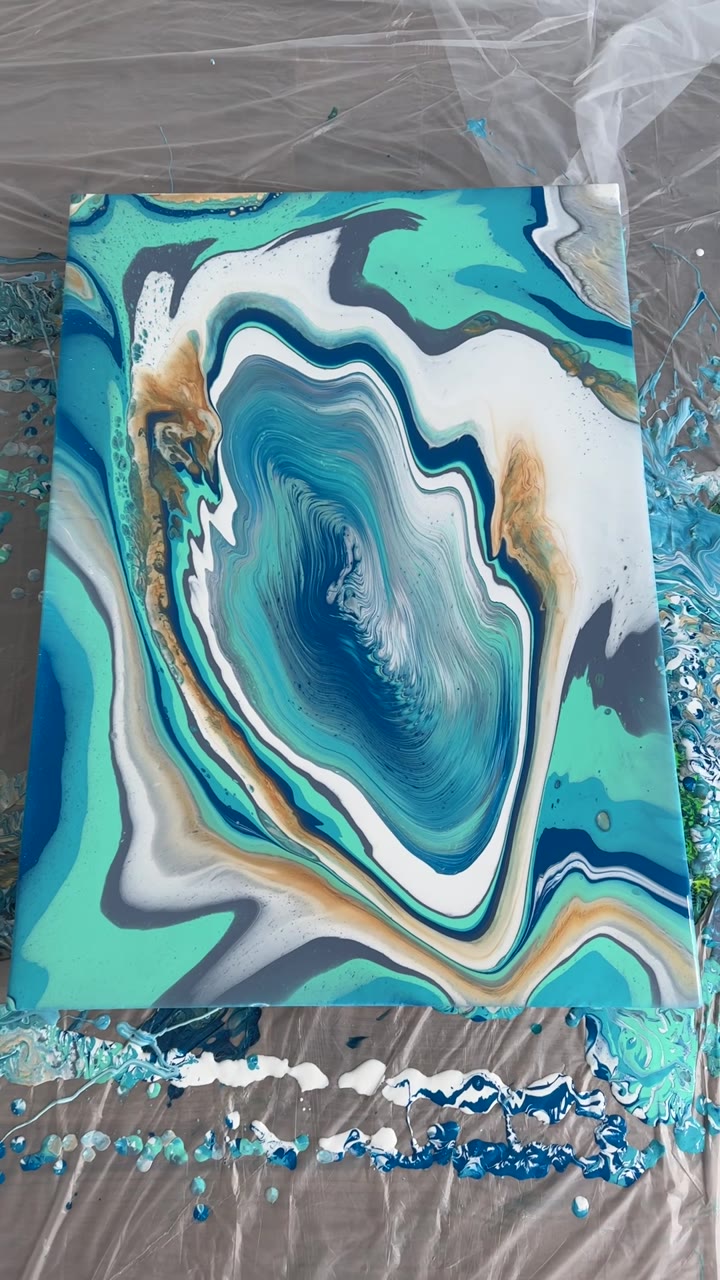
Green Geode (No. 25)
 0:13
0:13
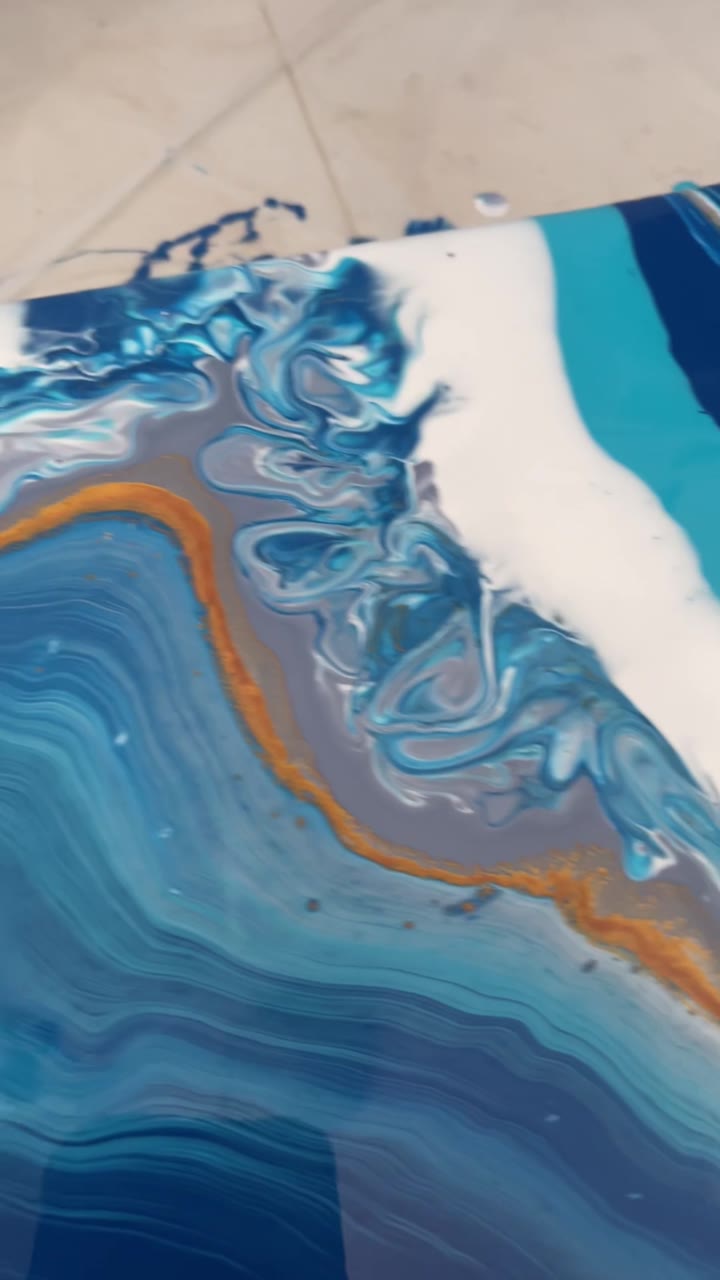
Mystic Dunes Geode and Caribbean Island Geode
 0:17
0:17
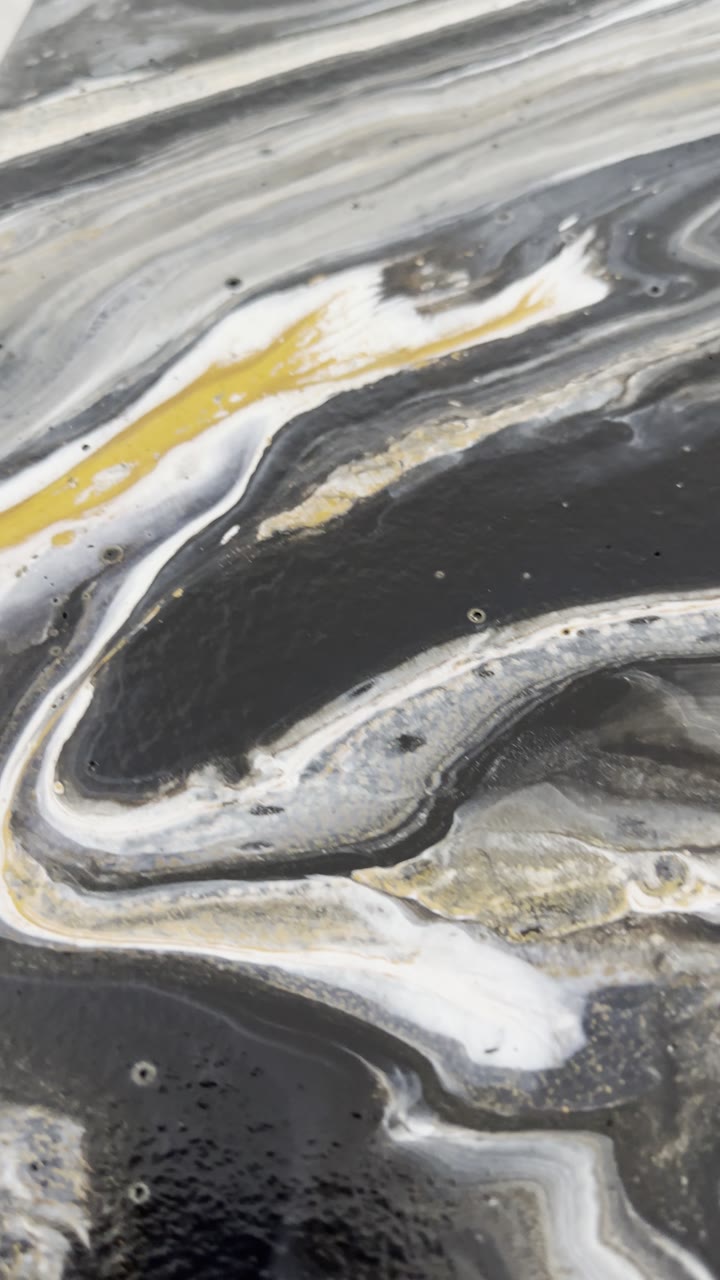
Blue Geode (No. 16)
 0:14
0:14
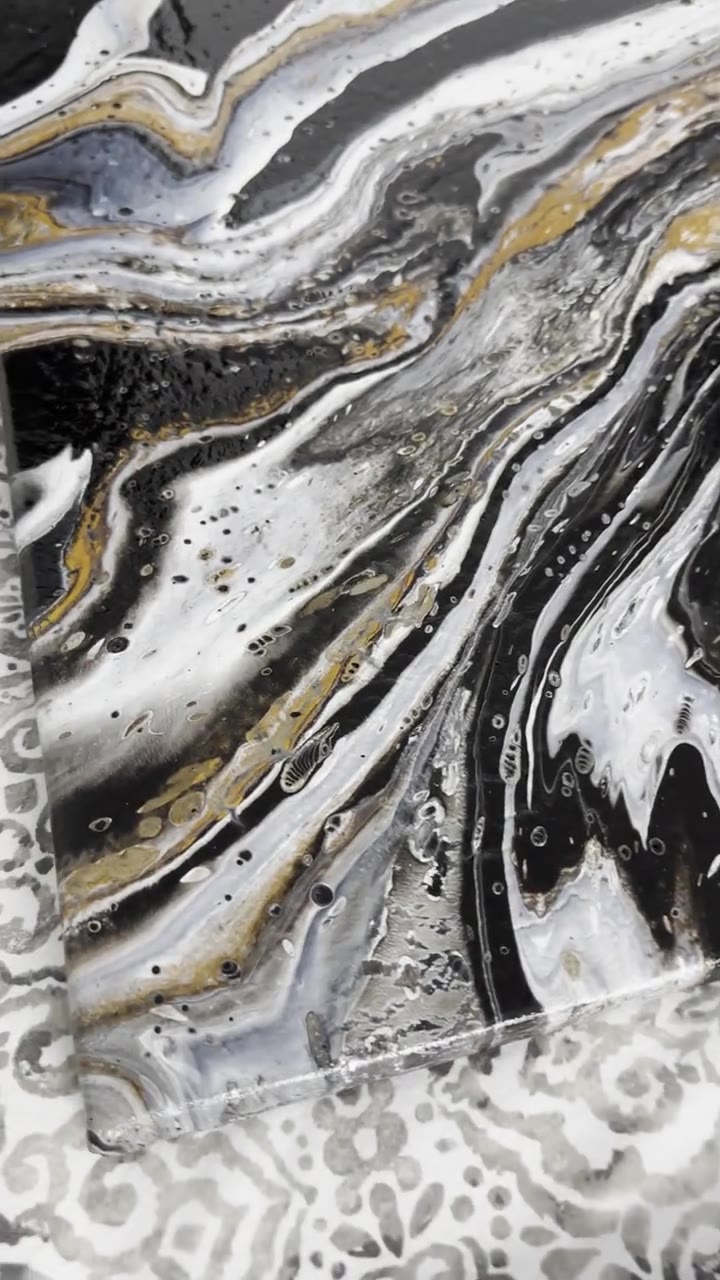
Essence of Wood
 0:38
0:38
Essence of Wood and Tiger Marble
 0:11
0:11
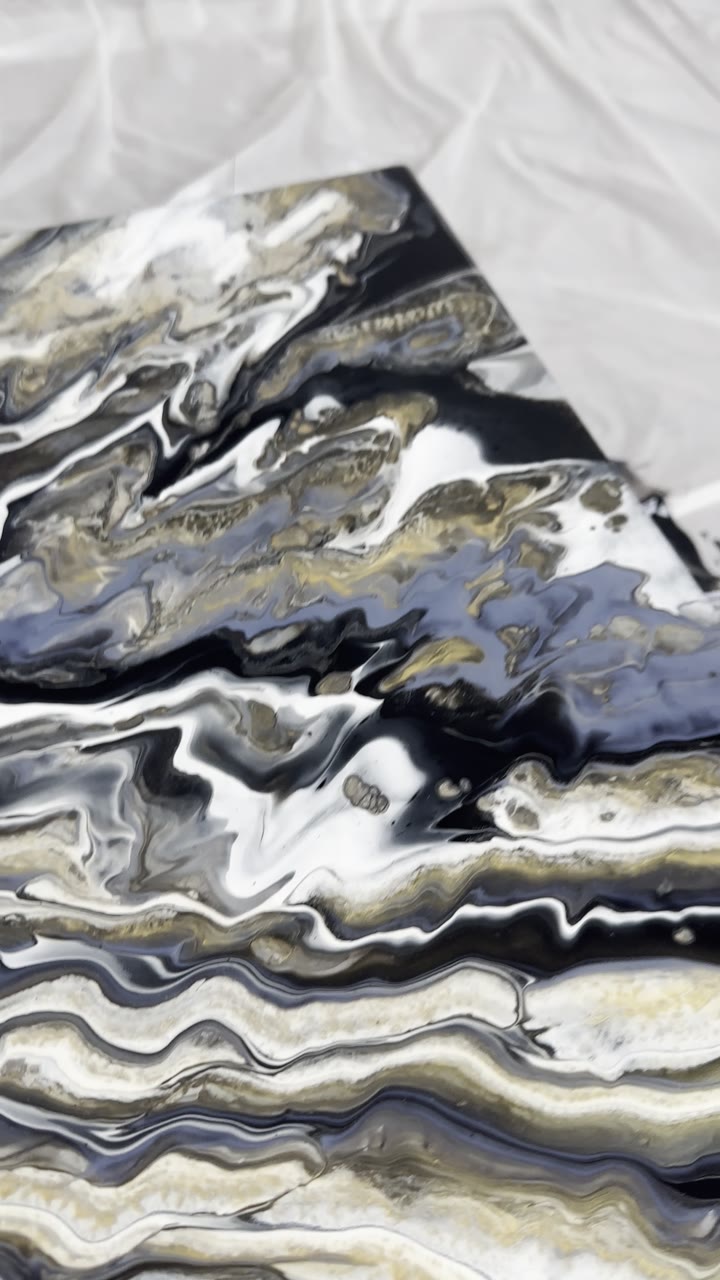
Tiger-Striped Marble